
Across 2024–25, the No Knives, Better Lives (NKBL) programme continued to strengthen Scotland’s youth work-led approach to violence prevention, equipping practitioners and young people with the understanding, skills, and confidence to build safer communities.
This year marked a significant step forward in embedding youth work principles, relationship-based practice, participation, and empowerment, into every aspect of our delivery.
Through a blend of in-person, online, and community-based activity, NKBL upskilled a record 309 practitioners from youth work, education, policing, social work, and related professions on the key drivers of youth violence, including harmful masculinity, poor mental health and emotional literacy, and weak conflict resolution skills. Alongside this, an impressive 2,061 e-learning courses were completed on the NKBL Learning Hub, highlighting the continued demand for flexible, accessible professional learning opportunities.
We refreshed and reissued our key practitioner and school resources to reflect a rights-based and assets-based approach, ensuring that young people are seen not as problems to be solved but as partners in creating solutions. This has been a key shift in practice, moving from prevention for young people to prevention with young people.
A total of 362 young people were directly involved in NKBL projects this year. Through creative, participatory methods such as peer education, storytelling, games, and virtual reality, young people developed emotional literacy, communication skills, and conflict resolution abilities, while having fun and connecting with peers. Importantly, this hands-on engagement deepened young people’s understanding of violence prevention as part of broader wellbeing and community-building efforts.
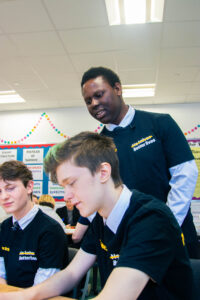
Preventing weapons carrying remains central to NKBL’s mission. This focus cuts across all areas of our work—training, education, and direct youth engagement. We continued to explore the root causes of knife and weapon carrying, connecting them to harmful gender norms, mental health, and emotional regulation.
In partnership with the Scottish Violence Reduction Unit (SVRU), NKBL delivered four regional practitioner training days in Inverclyde, North Ayrshire, Aberdeen, and West Lothian, training 83 practitioners face-to-face. A further 226 practitioners received training in violence prevention and knife carrying.
A major highlight was the launch of our new toolkit, Better Lives: Understanding Violence Prevention and Knife Carrying, alongside an accompanying e-learning course. This comprehensive package—designed for youth workers, teachers, housing officers, campus police, and volunteers—helps professionals build confidence in addressing violence prevention holistically, with empathy and youth voice at the centre.
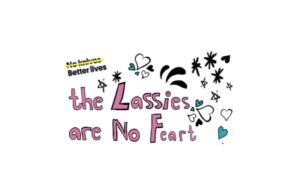
Recognising that violence affects and is expressed by young people of all genders, NKBL commissioned The Young Women’s Movement to co-create resources focused on violence between girls. Working with 14 young women aged 15–16 from a Glasgow youth group, the project produced two key resources:
The GirlPower Toolkit launched to an audience of 61 practitioners, and its accompanying TikTok campaign has achieved over 4,000 views, demonstrating the value of digital youth-led messaging in reaching peers where they are.
Our Imagine a Man strand continues to pioneer early intervention with boys aged 8–12, helping them explore positive masculinity through play, storytelling, and reflection. In 2024–25, NKBL worked with three groups of 37 young people, producing the research report and activity booklet Growing Up and Masculinities: A Space to Be.
Activities were designed through a sports and outdoor play lens, ensuring engagement suited to this age group while encouraging emotional expression, empathy, and inclusion. The resources launched at Burnfoot Primary in Hawick and are now being rolled out across the Scottish Borders, with national media interest highlighting their innovative approach.

This year, NKBL achieved SCQF accreditation for its Introduction to Restorative Approaches course, delivered in partnership with Fife College. The qualification (Level 5) will be available to the public over the next three years, embedding restorative practice as a recognised and scalable tool in youth and community settings.
In 2024–25, 12 in-person training sessions were delivered to 174 Police Scotland Youth Volunteers (PSYV). Their work is now being moderated for official certification, supporting young volunteers to promote dialogue, empathy, and accountability in their communities.
Building emotional literacy remains central to preventing violence. The Insights to Wellbeing (I2W) initiative trained 23 practitioners through three two-day Train the Trainer courses, launched an Introductory e-learning module, and established a Community of Practice focused on emotional regulation. These developments help practitioners embed wellbeing at the heart of violence prevention work, creating conditions for safer, more connected relationships among young people.
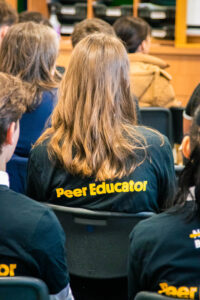
NKBL continues to champion peer-led prevention, giving young people the tools to educate and influence each other. This year, the programme expanded its peer education offer through:
Feedback from both practitioners and pupils informed the creation of two new workbooks to accompany the core peer education sessions. Young PSYV members also helped shape the new drugs module, strengthening youth ownership and authenticity.
“Fantastic course that I learned a lot from. I got a lot of resources that I will now take into my practice.”
“Resources will be invaluable.”
“Doing the Imagine a Man activities was the best part of the day – and I normally hate this stuff!”
“The accessibility was spot on, and the resources provided were excellent.”
E-learning user
“Lots of games that could be used in a variety of scenarios.”
E-learning user
NKBL’s work this year demonstrates that youth work is essential to violence prevention. Through trusted relationships, emotional literacy, early intervention and youth-led practice, the programme improves safety, wellbeing and confidence among young people across Scotland.
By equipping both practitioners and young people with strong skills in communication, conflict resolution and restorative approaches, NKBL strengthens local communities and supports long-term cultural change. Young people are not only better protected from harm, they are empowered as leaders, contributors and changemakers in building safer, more connected communities.