
The NSPCC, young people and partner organisations gathered outside Scottish Parliament recently to urge the Government to act now to ensure every child receives the relationships education they need to stay safe. This move was part of the charity’s ‘Read, Write, Relationships’ campaign, which it launched due to the patchy delivery of Relationship, Sexual Health and Parenthood (RSHP) education across Scotland.
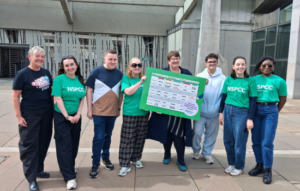
The NSPCC, young people and partner organisations gathered outside Scottish Parliament recently to urge the Government to act now to ensure every child receives the relationships education they need to stay safe.
This move was part of the charity’s Read, Write, Relationships campaign, which it launched due to the patchy delivery of Relationship, Sexual Health and Parenthood (RSHP) education across Scotland.
This week Scottish Green Party MSP, Laura Moodie, lodged a parliamentary motion, with cross party support, calling on ministers to guarantee all children and young people in Scotland have access to high-quality healthy relationships education. And on Tuesday, First Minister John Swinney made a commitment in the Programme for Government to tackling violence against women and girls.
On 3rd September, campaigners outside Holyrood held a giant school timetable with a glaring gap to highlight that this crucial learning was still not guaranteed for every child in Scotland.
The charity also delivered Back to School packs to MSPs explaining why action is urgently needed and outlining the campaign’s calls for change.
The NSPCC launched the campaign last December following extensive engagement with young people across Scotland through its local campaigns work with a variety of partners including Young Women Know and the Scottish Youth Parliament.
Many young people told the charity that the RSHP education they received was inconsistent, outdated and failed to reflect the realities of growing up today.
A YouGov poll commissioned by the NSPCC found that over two-thirds (67 per cent) of adults in Scotland believe that RSHP education should be made compulsory, while one in four believe it does not currently help children understand online abuse.1
Scotland is now the only nation in the UK where this crucial area of education is not underpinned by a legal requirement. Although RSHP sits within Curriculum for Excellence, schools have discretion over what is taught and when, resulting in significant variation in children’s experiences.
NSPCC Scotland wants to see a stronger recognition of children and young people’s right to this education in line with the UN Conventions of the Rights of the Child and is calling on the Scottish Government to legislate to make it a guaranteed entitlement.
The charity is also calling for the introduction of clear national practice-based guidance, dedicated funding, professional training, time and resources for teachers, and robust monitoring by Education Scotland to ensure consistent delivery across the country.