
Young people across Scotland have penned messages urging the new Education, Culture and Gaelic Secretary, Máiri McAllan, to give all pupils the opportunity to learn about healthy relationships in a card sent by the NSPCC.
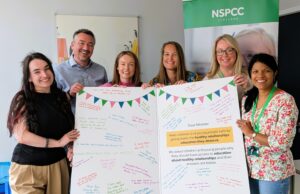
The children’s charity is calling on the Scottish Government to help keep young people safe by improving relationships education in schools. The card, which congratulates Ms McAllan on her new job, makes a direct appeal to Scotland’s Cabinet Secretary for Education, Culture and Gaelic to give all children the high quality, consistent and relevant relationships education they deserve.
In the card, children and young people have explained why learning about healthy relationships is important to them.
Rachel Talbot (19) said: “All children and young people should have access to education about healthy relationships because it is vital information that they will carry through all stages of their lives and everyone deserves to have the same information given to them.
“With the online world being so entrenched in the lives of young people, and technology continuing to develop further, this education is even more important because often the consensus about what’s not ok offline becomes blurred when talking about online interactions.”
A 13-year-old boy said: “It can make people feel better about themselves and their friendships.”
An 8-year-old boy said: “It is important so you can be happy with your friends and you don’t hit each other or push each other and you don’t say bad words to each other.”
Scotland is currently the only nation in the UK where this key part of the curriculum is not legally required.
Relationship, Sexual Health and Parenting education (RSHP) education is included in the health and wellbeing area of Curriculum for Excellence, but schools have discretion about what is taught and when.
NSPCC Scotland believes RSHP should be a core entitlement for all children, equal to learning to read and write.
The charity wants all schools in Scotland to be required by law to provide age-appropriate, consistent, and relevant RSHP for children and young people.
Carla Malseed, NSPCC Influencing Campaigns manager, said: “Through our work with young people in Scotland, we know the actual RSHP that pupils receive is patchy and inconsistent and does not cover some of the issues that are most important to them, like consent.
“Education about healthy relationships helps children and young people to understand healthy and unhealthy relationships and encourages positive behaviour. It also supports them to have empathy, respect and responsibility in relationships and to recognise inappropriate behaviour and abuse.
“Learning about healthy relationships is vital because it makes it far more likely that young people will speak up and ask for help when something is wrong.”
NSPCC Scotland’s Read, Write, Relationships campaign calls for a stronger recognition of children and young people’s right to this education in line with the UN Conventions of the Rights of the Child.
The charity wants the Scottish Government to provide clear and practice-based guidance for schools, adequate funding, professional training, time and resources for teachers, and regular monitoring and review by Education Scotland for this vital part of the curriculum.
Young people looking for support on any of the issues mentioned, can contact Childline on 0800 1111 or visit Childline.org.uk. Childline is available to all young people until their 19th birthday.
Adults who are concerned about a child or young person can contact the NSPCC Helpline by calling 0808 800 5000, or email: help@NSPCC.org.uk.