
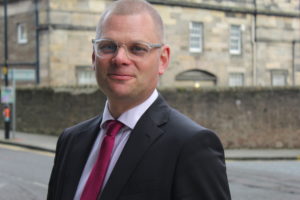
Last week I was invited by the Cabinet Secretary for Justice and Home Affairs to attend a follow-up to the Scottish Government’s Summit on Violence among Young People. Hosted at St Andrew’s House in Edinburgh on the 12th June, the meeting brought together the First Minister, Cabinet Secretary for Justice and Home Affairs, Cabinet Secretary for Education and Skills, Minister for Victims and Community Safety, Minister for Children and Young People, as well as cross-party justice leads and COSLA.
This took place against a backdrop of a recent increase in media engagements due to the tragic series of teenage stabbings last month. There has been an uptick in those carrying offensive weapons since 2018 of 11%, and violence in schools is up year-on-year since 2020. The broader context is that Scotland has a strong track record in reducing crime from historic levels, through a joined-up public health approach to violence prevention. YouthLink Scotland working with the government, partners and the sector, through initiatives such as No Knives, Better Lives has made a significant contribution over the last decade to this overall picture. Nevertheless, this worrying resurgence indicates that we need to keep working hard to ensure young people are fully informed and kept safe from the harmful practice of knife carrying. As the First Minister said at First Minister’s Questions last month, one incident of knife crime and one one life lost is one too many.
During the summit, the Cabinet Secretary for Justice and Home Affairs underlined youth work’s role in prevention, highlighting the “importance of safe spaces” and a real “desire to consider what more can be done to support youth work.” But words only become meaningful when matched by resources, and it is understandable that some of the young people and families directly affected want to see more direct action and less talking. Encouragingly, the meeting delivered a promise of increased funding, with specific mention of Cashback for Communities, but this can only be a start given the overall picture of cuts to youth work.
Youth work has long been a force behind effective public health and education-based approaches to violence reduction, and there was a broad consensus to continue building on initiatives like No Knives, Better Lives, Quit Fighting for Likes, and Imagine a Man. There was agreement to build on targeted interventions as well, with the VRU, police, schools and youth work combining efforts. There was clear emphasis also on the importance of universal community-based services and the key role they play in prevention.
Earlier this week, I was joined by youth work sector leaders at our Scottish Youth Work Leaders Forum to reflect on the summit. I also attended a workshop with colleagues working on youth work’s response to anti-social behaviour, and there was unity across the sector on working towards an upstream preventative approach. The youth work roundtable with young people on the 5th June, facilitated by SYP, also reinforced this message.
The profile of youth work and funding for the sector has been raised significantly over the past few months, and following the summit I wrote to the First Minister to welcome his support to early intervention and prevention through youth work, but also to highlight the ongoing challenges around cuts to youth work provisions – calling for developing a plan with the sector.
If this is to be the watershed moment we believe it can be, we must capitalise on the momentum. This is an opportunity: one where increased recognition of youth work could lead to the investment and strategic impetus we need to deliver for young people and prevent a worrying rise in anti-social behaviour. Let’s not waste it.